SKYSTAR PAGES
How Skystar Handles a Container From Booking to Vessel Loading
Skystar Shipping Agencies ·
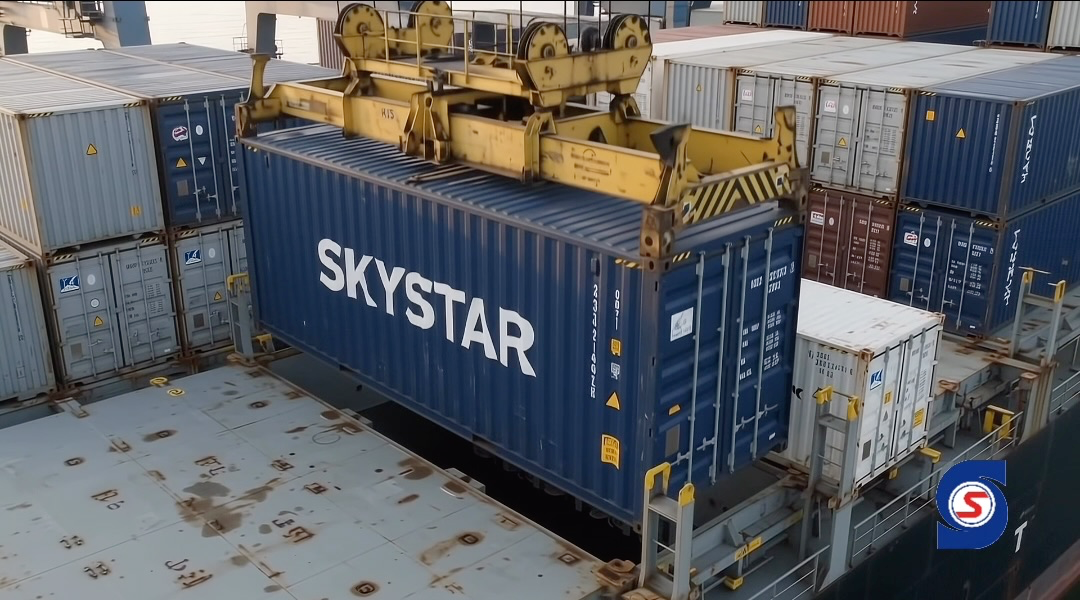
How Skystar Handles a Container From Booking to Vessel Loading The container lift may be the most visible moment. For Skystar, the work starts much earlier. When a container carrying a customer's cargo is finally lifted onto a vessel, the physical movement may take only a few minutes. For Skystar, however, that moment is the result of a sequence that begins well before the container reaches the terminal. A shipment has to be planned around the cargo, route, equipment, carrier schedule, documentation requirements and destination conditions. Each stage affects the next, which is why our role is not limited to arranging space on a vessel. It is to keep those stages connected. It starts with understanding the shipment Before approaching a carrier, our team first looks at what is actually being moved. The questions change depending on the cargo: Where is it moving from and to? What equipment is required? Is it dry cargo, refrigerated cargo, pharmaceutical cargo or oversized cargo? Are there temperature requirements? Are there special documentation or destination requirements? How time-sensitive is the movement? This matters because the lowest available freight rate is not automatically the right routing for every shipment. Equipment availability, transit time, transshipment points, destination capability and operational reliability may all influence the decision. Selecting the equipment and routing Once the shipment requirements are clear, Skystar coordinates the appropriate equipment and routing. For standard containerized cargo, this can involve evaluating available sailings and carrier options. For temperature-sensitive and pharmaceutical movements, the process requires additional attention to reefer equipment, required transport temperature and the operating requirements of the cargo. Skystar also operates its own 40-foot reefer equipment, allowing us to support selected temperature-controlled movements with greater involvement in the equipment side of the shipment. For difficult or emerging trade lanes—particularly across the Middle East, Red Sea and African markets—routing also needs to be considered beyond the first vessel. A shipment may involve transshipment, destination documentation, local agent coordination or market-specific requirements that need to be understood before departure. Booking is only the beginning Once space is secured, the shipment moves into execution. Our team coordinates with the relevant parties involved in the origin movement, which may include: the customer, transporter, shipping line, terminal, CFS, customs representatives and other operational partners. The objective is simple: make sure the container reaches each stage within the required operational window. That includes monitoring important milestones such as equipment release, stuffing, documentation, gate-in and carrier cut-offs. A container can physically reach a port and still miss a sailing if the operational requirements around it are not completed in time. That is why our team follows the shipment before the vessel begins loading—not only after something goes wrong. Documentation moves with the cargo The physical container and the shipment documentation have to progress together. Shipping instructions, weight information and other required documents need to be checked and submitted within the applicable timelines. For destinations where additional compliance documentation is required, the process can extend further. Skystar also supports ECTN/BSC requirements for several African markets, helping customers prepare the documentation required for applicable destinations. For most standard cases, once complete and accurate information is received, processing can typically be completed within a short operational window. The important part is not simply producing another document. It is making sure documentation does not become the reason cargo is delayed later in the journey. Monitoring the loading stage When the container reaches the terminal, responsibility does not suddenly disappear. The terminal and vessel operator control the physical loading process, but Skystar continues monitoring the shipment through the carrier and operational network. We track whether the container has reached the appropriate stage, whether the intended sailing remains on schedule and whether any change requires action. Shipping schedules can change. A vessel may be delayed. A connection may change. A container may be rolled. A transshipment schedule may move. The value of coordination becomes most visible when the original plan stops being the current plan. In those situations, our role is to understand what has changed, communicate it clearly and work with the relevant parties on the next practical step. Specialized cargo requires closer coordination Some shipments leave very little room for assumptions. Pharmaceutical and temperature-sensitive cargo, for example, may require defined temperature settings, suitable reefer equipment and closer operational monitoring. Project and out-of-gauge cargo can involve different equipment, dimensions, lifting considerations and vessel acceptance requirements. In such movements, the shipment cannot simply be treated as another booking number. The planning has to reflect the cargo. The shipment continues after sailing Vessel departure is an important milestone, but it is not the end of Skystar's involvement. Our network of destination agents allows coordination to continue after the cargo leaves origin. Depending on the shipment, this can include monitoring transshipment, documentation, destination requirements and communication with the receiving side. That is especially important on routes where local processes may be unfamiliar to the exporter. The customer's shipment may cross several organizations and countries. The customer should not have to manage every handoff alone. One shipment. Many parties. One coordinated movement. A photograph of a container being lifted onto a ship captures only a few seconds of the process. Behind it may be days of planning, communication, documentation and coordination. That is the part of logistics Skystar focuses on. Understanding the cargo. Choosing an appropriate route. Coordinating equipment. Working with carriers and operational partners. Following documentation and cut-offs. Responding when plans change. Connecting origin with destination. The container movement is visible. The coordination behind it usually is not. SKYSTAR — Own The Route.